Advocacy
Independent community pharmacists have no better or more effective advocate than NCPA on the issues that impact their patients and pharmacies.
Whether it's at Capitol Hill, state legislatures, regulatory agencies, or the courts, NCPA advocates for you on issues ranging from PBM abuses to your ability to practice to the full extent of your training.
Not sure how our advocacy efforts affect your pharmacy practice?
Advocacy Highlights
Legislative Action Center
Act TodayNCPA Priority Legislation
- Senate Legislative Priorities
- House Legislative Priorities
- Patients Before Monopolies
- Pharmacists Fight Back Act (H.R 6609 And H.R. 6610) Combatting Abusive PBM Practices in Federal Health Programs
- Medicare Part D Pharmacy Reimbursement and PBM Reform Summary
Resources
- Rx Access Act (H.R. 6400/S. 4106): Enhancing Transparency and Accountability in TRICARE
- “PBMs save money” ... really??
- Independent Closures Infographic
- Vertical Business Relationships within the U.S. Drug Channel, Source: Drug Channels
- DOSE OF REALITY: States and Agencies Spill the Facts - 39 State and Territory Attorneys General Urge Passage of Federal PBM Reform
Legislation - PBM Merger Timeline
- Spread Pricing Infographic
TrumpRx
TrumpRx is a platform for consumers to access lower cash prices for certain brand-name drugs. The document below outlines what the program is, how it works, and contains links to the TrumpRx official FAQ and drug list.
Advocacy Webinar Archive
Previous recordings are available here.
More information and resources on current federal and state issues and legislation, as well as on the engines that fuel our success can be found below:
Federal Priorities
Medicare
Community pharmacies provide cost-saving medication and pharmacy services to millions of Medicare Part B and D patients.
Regulatory Advocacy
NCPA follows regulatory affairs closely and provides comments whenever possible on behalf of its members.
Inflation Reduction Act: Resources and Advocacy
For pharmacies, reimbursement could be impacted under the new Medicare price negotiation framework, as any difference between the negotiated price and discounted price for a drug would be “trued-up” within prompt pay requirements.
LTC At Home
Ensuring pharmacies providing long term care patients residing at home are reimbursed at a rate which matches the higher level of care afforded to these patients. Appropriate payment for medical at home services is the number one advocacy priority of the NCPA LTC Division.
Compounding
Key policies and advocacy
TRICARE
Express Scripts, the Cigna-owned pharmacy benefit manager, continues to administer the TRICARE pharmacy benefit on behalf of the Department of Defense despite shrinking the pharmacy network by nearly 15,000 pharmacies in 2022, impacting 400,000 TRICARE beneficiaries. Adding to the patient disruption, ESI continues to list many pharmacies that were either terminated or who have voluntarily left the network due to poor contract terms as still in network.
State Priorities
NCPA’s 2026 state advocacy priorities
From comprehensive state-level PBM regulation to Medicaid managed care reform, NCPA is changing the pharmacy payment model. We are ready to assist our state partners with 2026 legislation and regulation that bring transparency, accountability, and fairness to community pharmacies.
NCPA State Advocacy Support
Advancing state pharmacy policy takes specialized knowledge, a clear strategy, and resources to put that strategy into action. In complement to the support offered by our state government affairs team, NCPA offers two programs to support state legislative and regulatory efforts: the State Panel of Experts and the State Advocacy Grant Program.
Comprehensive PBM regulation
Over time, PBMs have been allowed to operate virtually unchecked. A lack of transparency in PBM practices is increasingly leading states — with NCPA’s support — to implement licensure/registration, fair pharmacy audit, or generic drug pricing legislation to try to level the playing field for pharmacies and patients.
Is Your State Enforcing PBM Regulations?
Virtually every single state has passed some form of PBM regulations over the last several years. Although there have been great strides forward with comprehensive state PBM regulations and court victories, this is all irrelevant if the state departments of insurance are not enforcing these laws.
Medicaid managed care pharmacy payment reforms
State audits and studies are showing that Medicaid drug costs are increasing, and pharmacy reimbursements are decreasing. Something isn’t adding up. NCPA supports efforts to increase transparency and accountability and to ensure state oversight of Medicaid managed care programs.
Medicaid Cost of Dispensing Surveys
Medicaid cost of dispensing (COD) surveys directly determine the professional Medicaid dispensing fee paid to pharmacies. While almost all states use these data to set fees for their Medicaid fee-for-service programs, an increasing number are using these data to set fees in their Medicaid managed care programs.
Scope of Practice and Compensation for Services
Community pharmacists are the most accessible health care providers in the country. Expanding pharmacists' scope of practice allows patients to receive timely care for common conditions, preventive services, chronic disease management, and medication-related needs without unnecessary delays. NCPA works with state pharmacy associations and policymakers to remove barriers that prevent pharmacists from practicing to the full extent of their education and training while ensuring patients receive safe, high-quality care.
State Wins for Community Pharmacy
Annual report of state legislative and regulatory wins for community pharmacy.
State-Specific Community Pharmacy Impact Fact Sheets
These fact sheets report the economic impact of independent pharmacy by state. In presentations to policymakers, employers, and other groups, you'll find them useful in demonstrating the profound economic benefit of community pharmacy to your state's economy.
State Legislative Tracking
Click on the states to learn what community pharmacy-priority bills are active in legislatures throughout the country.
NCPA PAC

Legal Defense Fund


Months of Action
Community pharmacy achieved a significant legislative win this year as legislation requiring CMS to define and enforce reasonable and relevant contract terms, including those related to reimbursements, in Medicare Part D, was signed into law in February.
However, there is still much more to accomplish, and your continued engagement is necessary! Turn the upcoming Congressional recess periods into results by hosting your legislators for a pharmacy visit!
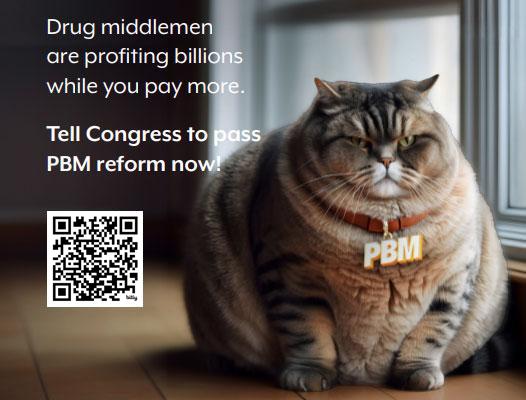
Finish the Fight
Independent pharmacists across the country have already made their voices heard. NCPA members sent more than 23,000 letters to Congress this year alone and have engaged their own patients, who have sent more than 6,000 messages supporting robust pharmacy benefit manager reform. With the Finish the Fight campaign, we’re not just mobilizing patients across the country, we’re empowering them to join us in the effort.