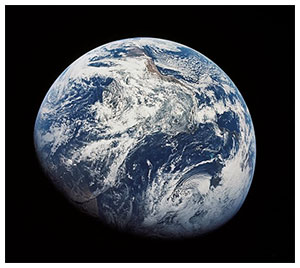
 Yesterday began the 28th U.N. Climate Change Conference (or COP28), whose plenary session opened with a troubling report that 2023 will almost assuredly be the warmest on record, capping nine consecutive years that have also been the warmest on record. Data through the end of October shows that this year is about 1.4 degrees Celsius (about 2.6 degrees Fahrenheit) warmer than preindustrial levels (the benchmark scientists use for climate change). A recent study in the Journal of the American Pharmacy Association revealed that among 70 polled pharmacists, 78 percent believed climate change “was happening” and 54 percent thought climate change was relevant to pharmacy practice. Then things get really interesting. Asked about the barriers that prevented them from communicating to their patients about climate change, 73 percent of pharmacists in the survey cited a lack of time, 49 percent a lack of knowledge, and 46 percent said that it would not make a difference. In the balance between intent and action, it was somewhat promising to see that nearly half of all respondents (48 percent) believed “pharmacists could have the greatest impact through increasing sustainability in the health care system.”
So, what does that look like? What is the scale of the problem in that health care system? A 2021 study published by the Canadian Pharmacists Journal about the pharmacist’s role in climate change noted that the health care system in the U.S. produces almost 10 percent of America’s share of global greenhouse gas emissions, citing 2018 data. “Pharmacists are uniquely positioned and skilled as trusted health care professionals and clinical leaders to take a leadership role in the environmental movement,” says the report’s author, Caitlin Roy, a pharmacist and researcher for the Saskatchewan Health Authority.
OK, so where does the rubber meet the road? Roy goes on to cite eight practical steps for pharmacists to consider such as promoting less carbon-intensive inhaled anesthetics and educating patients on proper medication disposal protocols. But, what’s happening at the macro level? There is a broader conversation within the industry about balancing the safety that sprays, injectables, blister packs, and child-proof bottles provide with the fact that the combined materials they utilize can’t be separated for recycling. Those plastic polymers, glass, paper, and cardboard components — with so much potential to reduce waste and the carbon footprint—remain largely untapped. Hospitals, too, which emit more than two-and-a-half times the amount of greenhouse gas than commercial buildings, can do their part, says the World Economic Forum, by switching to renewable energy sources. Machine manufacturers such as Philips can continue to improve their products, such their MRI machine that uses magnets and not helium. And, as we all suspected, telehealth has reduced transportation-related carbon emissions — one of those silver linings of the pandemic everyone talks about with an uneasy smile.
Is this progress a cause to celebrate or is this lack of progress a cause to consternate? That’s up to you. But, it is something to consider as a pharmacist, business operator, owner, or student in the coming years. The operative word in climate change is “change,” after all.