
2026 Innovation in Community Practice Poster Symposium
Sunday, Oct. 4, 12:15-1:45 p.m. CT
Convention Exhibit Hall
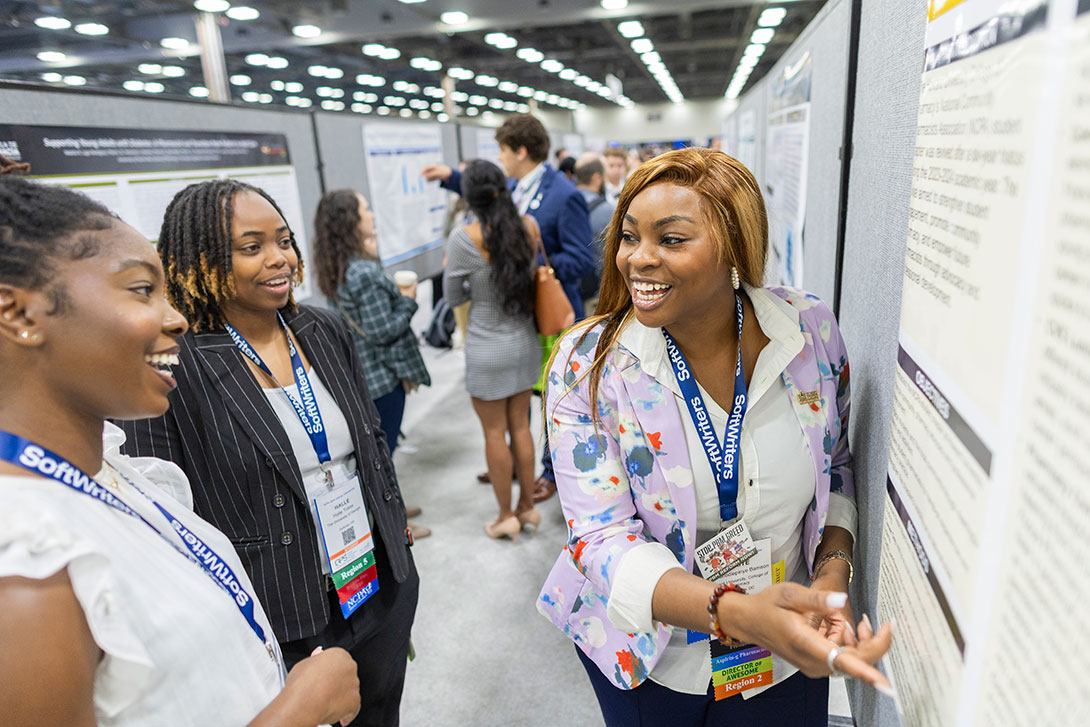
The NCPA Innovation Center is hosting the Innovation in Community Practice Poster Symposium to showcase independent community pharmacies that are advancing community practice through innovative ideas and research. The symposium is designed to engage pharmacists and pharmacy students in peer-to-peer learning about new opportunities to advance their practices. There is no registration fee; however, all participants must be registered for the convention and are responsible for any related expenses. This opportunity is open to pharmacists and pharmacy students.
How to participate:
Applications for the 2026 Innovation in Community Practice Poster Symposium are now closed.
Posters at the 2025 Innovations of Community Pharmacy Practice Poster Symposium
-
Comparing Self and Peer-Evaluations of Leadership Skills in Pharmacy Education
Presenters: Jack Satori
Institution: University of Missouri Kansas City School of Pharmacy
Purpose: Evaluation of Leadership skills in Pharmacy
View his poster here!
-
Building the Business Case for Central Fill: A Web-based Economic Calculator for Pharmacy Decision Making
Presenters: Xueying Zhao; Walter Leo
Institution: Waters Biosciences (Formerly BD Biosciences)
Purpose: To develop and deploy an interactive web-based economic calculator that enables community pharmacy stakeholders to evaluate the potential workforce and cost implications of central fill adoption under varying operational scenarios.
View the poster here!
-
Piloting MOUD Maintenance Clinical Services in Community Pharmacies: A Hybrid Implementation-Effectiveness Study
Presenters: Jennifer Bacci
Institution: University of Washington
Purpose: This pilot study will evaluate: (1) implementation of a community pharmacy model for MOUD maintenance services, and (2) preliminary effectiveness of the model on MOUD treatment continuity in three community pharmacies.
View the poster here!
-
Evaluation of the SafeGuardMS Train-the-Trainer Program
Presenters: Emma Glorioso; Ray Goodwin
Institution: University of Mississippi School of Pharmacy
Purpose: Community pharmacists are among the most accessible healthcare professionals and are uniquely positioned to improve opioid harm reduction in their communities. This study evaluated whether the SafeGuardMS train-the-trainer program increased pharmacists' knowledge, confidence, and preparedness to deliver opioid harm reduction education and expand naloxone access.
View the poster here!
-
Nerova Wellness Pharmacy Student Business Plan
Presenters: Braden Harman; Liem Watkins
Institution: Ohio Northern University
Purpose: Our top 10 business plan showcases our vision at Nerova Wellness Pharmacy to redefine independent community pharmacy by integrating behavioral health services into everyday patient care. Our goal is to empower patients with accessible, whole-person care that treats mental health as inseparable from physical health, proving that this model is both clinically meaningful and financially viable for independent pharmacy ownership.
View the poster here!
-
ConnectRx- Bridging Healthcare, Empowering Lives
Presenters: Jaelee Price, Mackenzie Hannon, Laney Furey, Kylie Pavlovec
Institution: Auburn University Harrison College of Pharmacy
Purpose: Our vision at ConnectRx Pharmacy is to bridge healthcare and empower lives by providing personalized, whole-person care. Our goal is to connect patients with the knowledge, resources, and support they need to achieve better health outcomes and lifelong wellness.
View the poster here!
-
Strategies to Enhance Patient Engagement in Community Pharmacy Maternal Health Services
Presenters: Kelsey Hake; Stephanie McGrath
Institution: University of Pittsburgh / PPCN
Purpose: To describe a Medicaid maternal health pharmacy payor program and strategies identified to support implementation in Pennsylvania community pharmacies.
-
The Impact of Community Pharmacy Interventions on Patient Engagement and Care Gap Closure
Presenters: Laura Rhodes; Theresea Tolle
Institution: CPESN Florida
Purpose: The purpose of this project is to evaluate the impact of pharmacist-led interventions implemented by community pharmacies to engage patients, close HEDIS care gaps, and improve quality measure performance across a statewide clinically integrated network of pharmacies.
View the poster here!
-
Scaling Community Pharmacy Care Hubs Through Coaching and Practice Transformation
Presenters: Laura Rhodes; Theresa Tolle; Madeline Clark
Institution: CPESN Florida
Purpose: The purpose of this project is to evaluate the impact of a multi-state community pharmacy initiative designed to support pharmacies in delivering and documenting patient-centered clinical services, increasing patient engagement, and establishing sustainable workflows for community pharmacies as a hub of care.
View the poster here!
-
Sustaining Disaster Recovery Through Community Pharmacy Care Coordination: Clinical and Financial Outcomes
Presenters: Madeline Clark; Laura Rhodes; Jake Galdo
Institution: CPESN North Carolina
Purpose: The purpose of this poster is to highlight a program evaluation of independent community pharmacies that implemented the documentation of care coordination into their pharmacy workflow.
View there poster here!
-
Redefining Care in Texas: Leveraging Pharmacists to Address Non-Medical Drivers of Health
Presenters: Haley McKeefer
Institution: Texas Pharmacy Association
Purpose: Community pharmacists are uniquely positioned to play a meaningful role in improving patient outcomes by addressing non-medical drivers of health. With the appropriate infrastructure, partnerships, and reimbursement models, Texas pharmacies can serve as essential access points for integrated, community-based care
View the poster here!
-
Spring Hill Pharmacy
Presenters: Emily Fisher; Charlize Johnson; Samantha Shilhavy
Institution: University of South Carolina College of Pharmacy
Purpose: Spring Hill Pharmacy exists to redefine independent pharmacy care by pairing dependable dispensing with pharmacist-led Long-Term Care services, strengthening medication safety and clinical partnerships for aging and chronically ill patients in Simpsonville South Carolina.
-
Community Benefit and Impact of CHWs
Presenters: Monty Rogers
Institution: CPESN Community Health
Purpose: Evaluate outcomes of CHWs in care coordination.
View the poster here!
-
Leveraging Interoperability Through Data Standards
Presenters: Thomas Miller
Institution: Seguridad, Inc
Purpose: Describe the application of the pharmacist e-care plan in interoperability
View the poster here!
-
SPHERE: A State-based Interoperability Opportunity
Presenters: Jake Galdo
Institution: Seguridad, Inc
Purpose: Discuss the role of a pharmacy health information exchange to advance pharmacy practice and sustainability.
View the poster here!
-
Understanding Missouri Medicaid Health Plan Member Use of Special Benefits and Programs
Presenters: Tripp Logan
Institution: CPESN Community Health
Purpose: Describe use awareness and use of special benefits offered by Missouri Medicaid health plans, from the perspective of members.
View the poster here!
-
Closing Vaccine Gaps with Community Pharmacies in Dialysis Clinics
Presenters: Richard Logan
Institution: CPESN Community Health
Purpose: Evaluate the impact of community pharmacists on vaccine hesitancy in dialysis centers
View the poster here!
-
Improving Diabetes Outcomes within a Community Pharmacy Health System
Presenters: Courtney Landewee
Institution: CPESN Community Health
Purpose: Evaluate the Rx4Innovation Type 2 Diabetes Quality Improvement Project.
View the poster here!
-
The Value and Impact of Community Pharmacies in Continuous Glucose Monitoring
Presenters: Julie Walker
Institution: CPESN Community Health
Purpose: Discuss potential economic modeling to support pharmacy service payments in the management of persons with continuous glucose monitoring.
View the poster here!
-
Optimizing Migraine Outcomes with Community Pharmacies
Presenters: James Henderson
Institution: CPESN Community Health
Purpose: Describe a pilot migraine optimization program in community pharmacies with community health workers.
View the poster here!
-
Cardiovascular Care in Rural Communities
Presenters: David Smith
Institution: CPESN Community Health
Purpose: Evaluate the impact of the cardiovascular care in rural communities program
View the poster here!
-
MOMS: Medications Optimizing Maternal Safety Expansion
Presenters: AnnMarie Pratt
Institution: CPESN Community Health
Purpose: Evaluate the impact of a community pharmacy-based maternal care program across Mississippi.
View the poster here!
-
Implementing an Age-Friendly Pharmacy Care Program
Presenters: Leanne Haley-Brown, Christine Lee, Nicole Brandt, Barbara Zarowitz
Institution: University of Maryland School of Pharmacy
Purpose: The objective of this presentation is to outline the benefits and steps community pharmacies can take to achieve age-friendly pharmacy recognition.
View the poster here!
-
Bridging the Gap: A Retrospective Review Evaluation of Pharmacist-Led Therapeutic Interchange
Presenters: Vishwa Bhakta
Institution: Legacy Community Health
Purpose: To analyze pharmacist-led therapeutic interchange promoting medication adherence, access, and reducing costs.
View the poster here!
Poster Category Details
-
Innovation in Community Practice:
- Eligibility: Open to all NCPA members
- Focus: Highlight new, creative, and savvy ideas implemented in a community pharmacy setting. This category emphasizes out-of-the-box thinking and entrepreneurship that improves patient care, workflow, access, or business sustainability. Posters that share implementation stories, barriers overcome, and measurable outcomes of new services or innovations in practice.
-
Community Pharmacy Research:
- Eligibility: Open to all NCPA members
- Focus: Research conducted in or about community pharmacy settings. This can include clinical outcomes research, operations research, policy evaluation, or implementation of new services.
-
Resident Reseach/Project:
- Eligibility: open to current or recent residents
- Focus: Projects completed as part of community-based residency or fellowship program, including research studies, quality improvement initiatives, or advanced practice service implementation. Posters that demonstrate project scope, resident leadership, and impact or sustainability of the intervention or study.
-
Student Research/Project:
- Eligibility: open to current students or recent graduates
- Focus: Research or projects completed by pharmacy students either independently, or as part of a course, capstone, or co-curricular activity. May include clinical, operational, or community service-focused work.
-
Student Business Plan Poster:
- Eligibility: open to students
- Focus: Display of the top 10 Good Neighbor Pharmacy NCPA Pruitt-Schutte Student Business Plan Competition plans submissions. Emphasizes entrepreneurship, sustainability, and community health impact.
-
NCPA Student Chapter Update:
- Eligibility: open to students and student chapter advisors
- Focus: Showcase achievements, initiatives, and growth of your NCPA student chapter. Highlights engagement, leadership, community involvement, and recruitment strategies.
FAQ:
-
Who should I contact if I have any questions about the 2026 Innovation in Community Practice Poster Symposium?
Please, contact haley.berger@ncpa.org with any questions or concerns.
-
When will I know if my poster was accepted?
Look out for an email from haley.berger@ncpa.org on Friday, August 21st, by 5 pm (EOD).
-
Is there any application fee for submitting a poster?
No, there is no charge to submit applications for the Innovations in Community Practice Poster Symposium.
If your poster is selected, you will be responsible for 2026 Annual Convention registration, transportation, and housing to Kansas City, MO which have costs associated with them.
-
Does NCPA print my poster for the symposium?
No, poster presenters are responsible for printing and bringing their posters to the Annual Convention.
-
What dimensions is best for the poster template?
The maximum size for printed posters is 36 x 48 inches.